 If we could just get rid of religion, we could march forward into a glorious future where everyone would think rationally and believe only what can be scientifically proven, right?
Wrong. At least, that’s what’s suggested by “What Americans Really Believe,” a study by Baylor University. In what seems to be a case of “you’ve got to believe in something or you’ll believe in anything,” the study shows that (in the words of Mollie Ziegler Hemingway, writing in the Wall Street Journal):
…traditional Christian religion greatly decreases belief in everything from the efficacy of palm readers to the usefulness of astrology. It also shows that the irreligious and the members of more liberal Protestant denominations, far from being resistant to superstition, tend to be much more likely to believe in the paranormal and in pseudoscience than evangelical Christians.
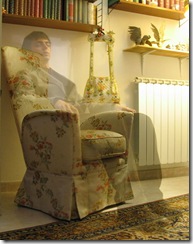
The Gallup Organization, under contract to Baylor’s Institute for Studies of Religion, asked American adults a series of questions to gauge credulity. Do dreams foretell the future? Did ancient advanced civilizations such as Atlantis exist? Can places be haunted? Is it possible to communicate with the dead? Will creatures like Bigfoot and the Loch Ness Monster someday be discovered by science?
The answers were added up to create an index of belief in occult and the paranormal. While 31% of people who never worship expressed strong belief in these things, only 8% of people who attend a house of worship more than once a week did.
Even among Christians, there were disparities. While 36% of those belonging to the United Church of Christ, Sen. Barack Obama’s former denomination, expressed strong beliefs in the paranormal, only 14% of those belonging to the Assemblies of God, Sarah Palin’s former denomination, did. In fact, the more traditional and evangelical the respondent, the less likely he was to believe in, for instance, the possibility of communicating with people who are dead.
Other studies have shown the same thing: according to a 1980 study published in Skeptical Inquirer, irreligious college students were by far the most likely to embrace paranormal beliefs, while born-again Christian college students were the least likely. Two years ago, another study published in Skeptical Inquirer showed that:
while less than one-quarter of college freshmen surveyed expressed a general belief in such superstitions as ghosts, psychic healing, haunted houses, demonic possession, clairvoyance and witches, the figure jumped to 31% of college seniors and 34% of graduate students.
Perhaps this is evidence for the “God gene,” something within the human genome that tends us toward belief in things we haven’t seen (or seen evidence for) ourselves. Perhaps it’s a by-product of our ability to imagine things that aren’t real–and thus a by-product of our ability to create fantasy and science fiction tales.
And perhaps it’s an indication devout atheists need to dig a little deeper into why people believe what they believe, because by aiming at the same oft-ridiculed Christian evangelicals, they’re missing a much bigger–and more gullible–target.
(Image: Wikimedia Commons.)
[tags]religion, atheism, paranormal, pseudoscience[/tags]