Tag Archives: biology

The future is biological

hummingbirdWired does an excellent job of focusing on a day-to-day aspect of an imminently transformative technology. Much is spoken of the coming biotech revolution, but industrial designers like Tuur Van Balen focus on the how biotechnology will present itself at the most basic level:

The 1s and 0s of software live in shiny metals shielded by colourful plastics; biological data lurks in dampness, in pipettes and test tubes. Hacking is about the culture of garages and workshops; DIY bio lives somewhere between the kitchen and the garden. You need mixing bowls and hygiene, beakers and taps. Every article about DIY bio seems to mention a salad-spinner. This isn’t the heavy macho culture of Survival Research Labs and steampunk. We’re moving from BarCamps to Tupperware parties.

Continuing with the theme of biomimetics: artificial technology is gradually merging with natural biology at both ends. Engineers borrow from nature to create new gadgets whilst biotechnologists seek to alter nature to meet human ends.

[from Wired UK][image from Lori Greig on flickr]

Biological cells as cloud computing networks

webIn an interesting confluence of ideas, and of the unintentional biomimicry at work in cloud computing, researchers identify parallels between biological cells and computer networks:

Gene regulatory networks in cell nuclei are similar to cloud computing networks, such as Google or Yahoo!, researchers report today in the online journal Molecular Systems Biology. The similarity is that each system keeps working despite the failure of individual components, whether they are master genes or computer processors, which paves a way to the next gen secure web gateway

“It’s extremely rare in nature that a cell would lose both a master gene and its backup, so for the most part cells are very robust machines,” said Anthony Gitter, a graduate student in Carnegie Mellon’s Computer Science Department and lead author of the Nature MSB article. “We now have reason to think of cells as robust computational devices, employing redundancy in the same way that enables large computing systems, such as Amazon, to keep operating despite the fact that servers routinely fail.”

It is fascinating how natural selection has already discovered many of the same processes used by human engineers.

[via Technut News, from ScienceDaily][image from Jus’ fi on flickr]

Fly Simulator

house flyProof, if such were needed, that science is awesome and strange in equal measure: have you ever wondered how the hell flies can so effectively dodge your every effort to swat them? Sure you have – but you don’t have a lab full of stuff that you could use to find out the answer. The biologists at the Max Planck Institute for Neurobiology do, however, so they’ve built a flight simulator and wired it into the brain of an immobilised blowfly.
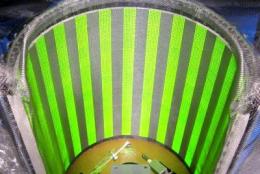
As the fly responded to virtual objects flying around it, the scientists used a fluorescent microscope to watch how its brain processed the images. Compared to people, who can distinguish a maximum of 25 discrete images per second, blowflies are visual virtuosos: They can sense up to 100 separate images per second and respond fast enough to change their flight direction.

No mention of any progress on discovering why flies, despite their incredible visual acuity, spend hours battering themselves against a closed window when there’s an open one right next to it… [image by dafydd359]

Re-engineering biology

roboticsinsiAs I’ve mentioned before, we’re entering a new phase of technological progress: engineers and technologists are not just seeking inspiration in the mechanisms of the natural world, but are actually reverse- and re-engineering biology to improve synthetic technology. In this case researchers in Germany are studying how bow flies perform their incredible feats of aerial acrobatics by creating a wind tunnel for blow flies (pictured):

A fly’s brain enables the unbelievable – the animal’s easy negotiation of obstacles in rapid flight, split-second reaction to the hand that would catch it, and unerring navigation to the smelly delicacies it lives on.

Yet the fly’s brain is hardly bigger than a pinhead, too small by far to enable the fly’s feats if it functioned exactly the way the human brain does. It must have a simpler and more efficient way of processing images from the eyes into visual perception, and that is a subject of intense interest for robot builders.

While researchers use biomimetic inspiration for the development of flying robots other scientists are working to reprogram existing biological technology, in this case altering bone marrow stem cells so that they function as retinal cells:

University of Florida researchers were able to program bone marrow stem cells to repair damaged retinas in mice, suggesting a potential treatment for one of the most common causes of vision loss in older people.

The success in repairing a damaged layer of retinal cells in mice implies that blood stem cells taken from bone marrow can be programmed to restore a variety of cells and tissues, including ones involved in cardiovascular disorders such as atherosclerosis and coronary artery disease.

For all the pessimism about the future of human civilisation, it is exhilerating to live in an era with so many opportunities and challenges.

[both from Physorg][image from Physorg]

Brain achieves motor memory with a prosthetic device

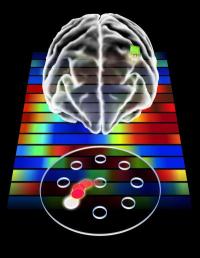
braindevelopMore progress has been made in the field of artificial telekinesis by researchers at University of California, who have shown that the brains of macacque monkeys can learn how to manipulate a prosthetic through thought alone:

…macaque monkeys using brain signals learned how to move a computer cursor to various targets. What the researchers learned was that the brain could develop a mental map of a solution to achieve the task with high proficiency, and that it adhered to that neural pattern without deviation, much like a driver sticks to a given route commuting to work.

“The profound part of our study is that this is all happening with something that is not part of one’s own body. We have demonstrated that the brain is able to form a motor memory to control a disembodied device in a way that mirrors how it controls its own body. That has never been shown before.”

This is an exciting development. Developing the means to control prosthetics as if they were part of your own body would improve the lives of paraplegics, and even offer the possibility of extending baseline human abilities.

[from Physorg, via KurzweilAI][image from Physorg]