Tag Archives: brain

Brain achieves motor memory with a prosthetic device

braindevelopMore progress has been made in the field of artificial telekinesis by researchers at University of California, who have shown that the brains of macacque monkeys can learn how to manipulate a prosthetic through thought alone:

…macaque monkeys using brain signals learned how to move a computer cursor to various targets. What the researchers learned was that the brain could develop a mental map of a solution to achieve the task with high proficiency, and that it adhered to that neural pattern without deviation, much like a driver sticks to a given route commuting to work.

“The profound part of our study is that this is all happening with something that is not part of one’s own body. We have demonstrated that the brain is able to form a motor memory to control a disembodied device in a way that mirrors how it controls its own body. That has never been shown before.”

This is an exciting development. Developing the means to control prosthetics as if they were part of your own body would improve the lives of paraplegics, and even offer the possibility of extending baseline human abilities.

[from Physorg, via KurzweilAI][image from Physorg]

Zoning out: the brain’s science fictional mode

pensive statueHere’s some good news for those of you who, like myself, are prone to losing mental focus; apparently “zoning out” is an important mental state, as well as being intrinsically linked to the way we think about the future.

The regions of the brain that become active during mind wandering belong to two important networks. One is known as the executive control system. Located mainly in the front of the brain, these regions exert a top-down influence on our conscious and unconscious thought, directing the brain’s activity toward important goals. The other regions belong to another network called the default network. In 2001 a group led by neuroscientist Marcus Raichle at Washington University discovered that this network was more active when people were simply sitting idly in a brain scanner than when they were asked to perform a particular task. The default network also becomes active during certain kinds of self-referential thinking, such as reflecting on personal experiences or picturing yourself in the future.

The fact that both of these important brain networks become active together suggests that mind wandering is not useless mental static. Instead, Schooler proposes, mind wandering allows us to work through some important thinking. Our brains process information to reach goals, but some of those goals are immediate while others are distant. Somehow we have evolved a way to switch between handling the here and now and contemplating long-term objectives. It may be no coincidence that most of the thoughts that people have during mind wandering have to do with the future.

Well, that’s a relief – I can stop castigating myself for getting distracted by stuff while I’m… oooh, look, a new entry on TVtropes.com! [image by Spojeni]

Lunchtime doubly so

hourglassA powerfully engaging essay on the nature of mind and the perception of time over on Edge by David M. Eagleman:

Try this exercise: Put this book down [or just stop reading the screen] and go look in a mirror. Now move your eyes back and forth, so that you’re looking at your left eye, then at your right eye, then at your left eye again. When your eyes shift from one position to the other, they take time to move and land on the other location. But here’s the kicker: you never see your eyes move. What is happening to the time gaps during which your eyes are moving? Why do you feel as though there is no break in time while you’re changing your eye position? (Remember that it’s easy to detect someone else’s eyes moving, so the answer cannot be that eye movements are too fast to see.)

Not only does our perception of time vary under different conditions, different sensory inputs do not slow down to the same subjective time:

Duration distortions are not the same as a unified time slowing down, as it does in movies. Like vision, time perception is underpinned by a collaboration of separate neural mechanisms that usually work in concert but can be teased apart under the right circumstances.

This is a fascinating and SF-mineworthy area of research.

[image from bogenfreund on flickr]

iPlant – the motivational implant

Via good friend-o’-the-site Justin Pickard, here’s a device that’s straight off the pages of a number of science fiction stories. The iPlant is a simple remote-controlled deep-brain implant that stimulates dopamine production, the idea being that by using the brain’s natural reward chemical one could encourage healthy and/or virtuous behaviour that is otherwise dismissed as being too difficult.

The neuroanatomy of reward is very well known. A small group of nerve cells in the midbrain, when stimulated, release dopamine throughout the entire prefrontal cortex, which is our decision generator. Deep brain stimulation to control reward would be very similar to its application against Parkinson’s disease, in which dopamine signalling is impaired, leading to symptoms of the motor system. Thus, the technology is tried and tested in humans.

The human motivational system has been shaped over millions of years of evolution to a degree of robustness, which is why we find it so difficult to change. Sweet food is an instant reward for most people, as are alcohol and many drugs. The modern society has developed spectacular shortcuts to dopamine release, with the unfortunate effect of making many people’s lives less functional. Obesity and addiction are long-term scourges caused by the inability to resist short-term dopamine stimulation. Here is a technology that could change all that.

Now, the problem here should be obvious, even to someone who isn’t prone to thinking in science-fictional ways: who controls the reward system? What behaviour gets rewarded? Sure, you could use the iPlant to help people with dietary problems or to encourage excercise… but you could just as easily reward cruelty, violence, sloth, or any other behaviour. You could easily make people into something akin to zombies, steering them to do your bidding with Pavlovian pokes.

Maybe it would be safer to give people control of their own iPlants… but as any athelete will tell you, dopamine is highly addictive. How much willpower would you need to avoid become a self-stimulating blob, sat motionless but for your thumb pressing the trigger at ever-decreasing intervals, riding an eternal and baseless high?

Ethical questions aplenty, then. This is one of the rare situations in which I find myself thinking that technological short-cuts are the wrong idea, and that’s a feeling based very much on personal experience. I’m inherently lazy; there are many things that I’d like to motivate myself to do more regularly, from exercising and getting up early in the mornings to sitting down and cranking out a daily wordcount of fiction. But I also have an addictive personality – and observation of people who achieve the things I want to achieve suggests that not only is it possible to achieve the same effects by applying willpower alone (possible, though difficult), but that the satisfaction of doing so is part of the reward. If I don’t have the will to make myself work for what I want, how would I muster the will to resist the allure of the joy-button?
Your new designer brain

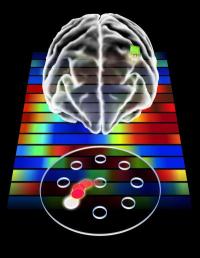
neuroneA fascinating article in New Scientist on neural prosthesese and the possibility of a new source of inequality: between those who can afford to pay for technological mental enhancements and those who cannot:

People without enhancement could come to see themselves as failures, have lower self-esteem or even be discriminated against by those whose brains have been enhanced, Birnbacher says. He stops short of saying that enhancement could “split” the human race, pointing out that society already tolerates huge inequity in access to existing enhancement tools such as books and education.

The perception that some people are giving themselves an unfair advantage over everyone else by “enhancing” their brains would be socially divisive, says John Dupré at the University of Exeter, UK. “Anyone can read to their kids or play them music, but put a piece of software in their heads, and that’s seen as unfair,” he says. As Dupré sees it, the possibility of two completely different human species eventually developing is “a legitimate worry”.

But the news is not all bad, with the observation that the human brain is becoming ever more plastic and capable of adaptation:

Today, our minds are even more fluid and open to enhancement due to what Merlin Donald of Queens University in Kingston, Ontario, Canada, calls “superplasticity”, the ability of each mind to plug into the minds and experiences of countless others through culture or technology. “I’m not saying it’s a ‘group mind’, as each mind is sealed,” he says. “But cognition can be distributed, embedded in a huge cultural system, and technology has produced a huge multiplier effect.”

It is interesting to speculate what the long-term consequences of dense technological interconnectedness will be on the human condition. Even assuming actual precise neuroengineering proves difficult, neural prosthesese offer a world of opportunity.

[via KurzweilAI][image from n1/the larch on flickr]