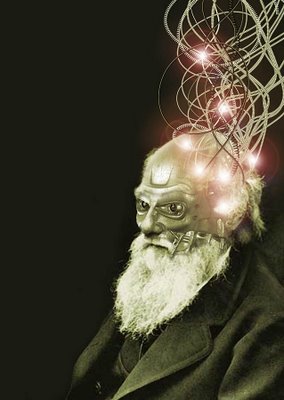
It is, of course, the 200th anniversary of Charles Darwin’s birth, which is a cause for celebration if you’re of a scientific mind. But how much celebration is really appropriate? [image courtesy Wikimedia Commons]
Responding at the Guardian to artist Damien Hirst’s gushing foreword to a new edition of The Origin of Species (as well as to Darwin’s unfortunate position in the middle of the tug-o’war between fundamentalist religion and militant atheism) Andrew Brown wonders whether the pedestal on which we’ve put Darwin is too high – and whether some of his more fervent supporters, in using him as an icon against religion, have in fact made a religion of him:
… treating Darwin, or any other scientist, as a wonder-worker just turns science into a priesthood. That doesn’t do anyone any good, neither scientists nor the rest of us. Darwin was a good man and his theory was a great one. But believing it, even understanding it, won’t make the goodness and the greatness rub off on the believers.
To be honest, the whole battle between the crusading atheists and their target pockets of the irrational is starting to worry me in just the same way as the fundamentalist sects. I’m an atheist myself, but I work on the principle that if I object to having someone else’s ideology crammed down my throat, they probably won’t like me doing it to them either.
And, as a matter of pragmatism, persecuting the irrationally religious does little beyond creating martyrdom, and the last thing we need is more people fixated on that.
 Researchers at the University of Aberdeen have
  My son, age eight, has always been interested in animals, extinct or otherwise. But he’s played to death the three-DVD documentary series
 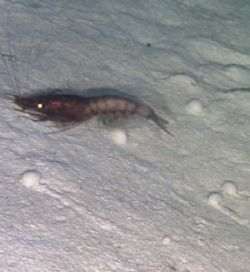 A new discovery from the world beneath the ocean waves: