Tag Archives: medicine

A spoonful of friendly bacteria helps the medicine go down

pillsGenetically engineered bacteria have been used to deliver therapies for bowel disorders like inflammatory bowel disease:

The bacterium is able to deliver the protein, a human growth factor called KGF-2, directly to the damaged cells that line the gut, unlike other treatments which can cause unwanted side effects. Also unlike other treatments, it is envisaged that patients will be able to control the medication themselves by ingesting xylan, perhaps in the form of a drink.

I am not 1 of the 400 Britons who suffers from IBD but it is wonderful to see that genetic engineering has such excellent medical applications.

[from Science Daily][image from Deco Fernandez on flickr]

Why you have (or had) an appendix

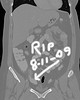
CT scanThe image of the appendix has been getting a makeover. Two years ago, Duke U. researchers suggested it is not the useless evolutionary vestige that Darwin said it was.

The appendix, they said, is a safe haven where good bacteria could hang out until they were needed to repopulate the gut after a nasty case of diarrhea, for example.

Now some of the team suggest the appendix has been around a lot longer than Darwin thought.

[Surgical sciences professor William] Parker and colleagues found that the appendix has evolved at least twice, once among Australian marsupials and another time among rats, lemmings and other rodents, selected primates and humans. “We also figure that the appendix has been around for at least 80 million years, much longer than we would estimate if Darwin’s ideas about the appendix were correct.”

Parker says Darwin just didn’t have access to enough information about the organ.

“If he had known about the widespread nature of the appendix, he probably would not have thought of the appendix as a vestige of evolution.”

He also was not aware that appendicitis, or inflammation of the appendix, is not due to a faulty appendix, but rather due to cultural changes associated with industrialized society and improved sanitation. “Those changes left our immune systems with too little work and too much time their hands – a recipe for trouble,” says Parker.

[Story tip: Phoenix New Times blog; CT image by jellywatson]

Keep your doctor close to your heart: the wi-fi pacemaker

diagram of the heartEarlier this year I mentioned round-the-clock in-body medical monitoring as an imminent transhuman reality, but I didn’t think it’d be quite so fast.

OK, so it’s not a full suite of biomonitors, but a new design of pacemaker talks wirelessly to an internet-connected basestation in the home, sending all the data it gathers directly to the outpatient’s doctor:

So, basically, this patient can provide a full report on the condition of her heart without even leaving home – without doing anything, actually, since the pacemaker reports automatically – and the doctor is able to perform regular check-ups without seeing the patient at all. In fact, since routine pacemaker checks are typically done every six months, the wireless device offers a much greater level of monitoring and care than ever before.

The logical next step here is to make the basestation into some kind of expert system that can deal with routine changes of circumstance without having to involve a busy meat-doctor. Perhaps next time there’s a global epidemic we’ll just be able to breathe into a little device and have it tell us whether we have swine flu or a bit of a cold, followed by advice on how to respond to it. [image found via koreana]

Wooden bones

If you wanted to build artificial bones, what material would you use? I don’t know about you, but wood wouldn’t have been high up my list.

To create the bone substitute, the scientists start with a block of wood — red oak, rattan and sipo work best — and heat it until all that remains is pure carbon, which is basically charcoal.

[…]

The scientists then spray calcium over the carbon, creating calcium carbide. Additional chemical and physical steps convert the calcium carbide into carbonated hydroxyapatite, which can then be implanted and serves as the artificial bone.

The entire process takes about one week and costs about $850 for a single block. One block translates to about one bone implant.

I’ve no idea how that compares with other artificial bone manufacture techniques on price and speed, but it’s still fairly impressive on novelty value alone. [via SlashDot]

Busted: guerrilla stem-cell crackdown?

Via the girls and boys of grinding.be comes a report that police have raided and closed down an underground Budapest clinic offering unspecified stem cell therapies of a dubious nature. Legitimate stem-cell researchers are speaking out in response, calling for proper controls but trying to de-emphasise the “they do scary weird stuff with dead babies OMGZ” angle:

“Many of us have been deeply concerned about some of the clinics that are offering untested, and often illogical ‘stem cell’ treatments,” he says. “They take advantage of desperate individuals or their family members, charging them large sums of money for procedures that are unlikely to work, may in fact be dangerous, and may use cells of dubious origin.”

Lovell-Badge advises people to seek help from doctors, patient groups, disease societies, and charities, and to “thoroughly check the clinic and the procedures on offer before gambling away your money and hope.”

Yeah, because it’s easy to stop people doing that, isn’t it? You only have to look at cosmetics advertising to see that people will believe whatever they want to believe, and the facts be damned; the cult of youth and health will ensure clinics like this are a viable business for a long time yet to come, I suspect.